CNC Lathe vs Turning Center: Which Fits Your Production Needs?
A standard CNC lathe handles turning and threading, while a full turning center adds milling, drilling, and live tooling. The choice depends on part complexity, fixture needs, and required tool change cycles.
- A standard CNC lathe covers turning, facing, and threading with a rotating workpiece and fixed or limited tooling.
- A turning center combines lathe functions with a milling head, live tooling, and multi-axis drilling for complex parts.
- Standard lathes offer higher throughput and lower tooling cost for high-volume, simple geometries.
- Turning centers reduce setup time and fixture changes for parts requiring multiple operations in one cycle.
- Match the machine to your part family, material mix, and required cycle time.
What defines a CNC lathe
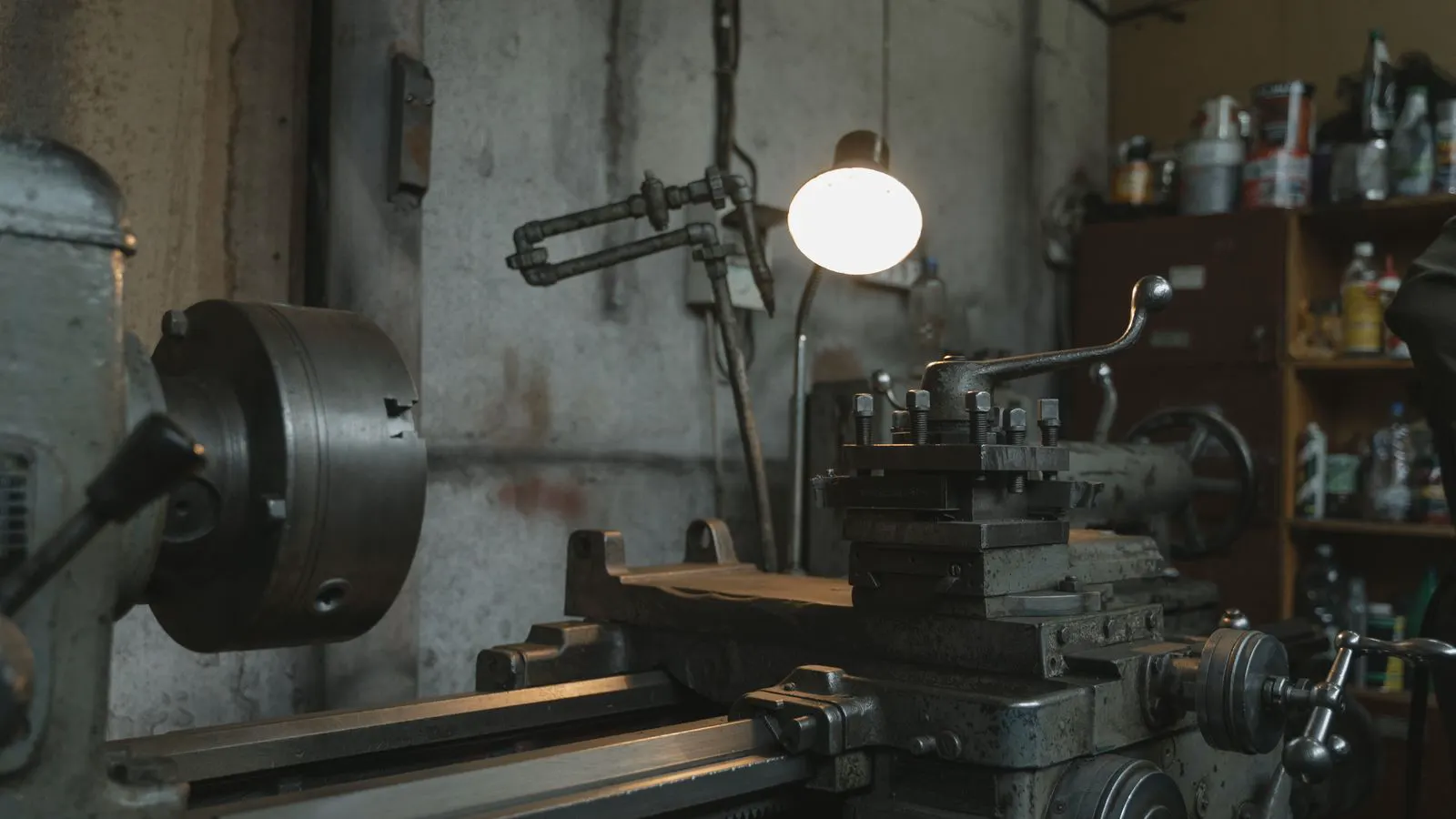
A CNC lathe holds a workpiece in a chuck or between centers. It rotates the part while cutting tools advance axially and radially. The core operations are turning, facing, boring, and threading.
The tool turret changes position automatically. Most standard lathes use a fixed tool head. The tool moves in X and Z directions. Some machines allow a second axis for basic drilling or reaming, but the tool itself does not rotate.
This setup suits parts where the geometry is primarily cylindrical. A shaft, a flange, a bushing, or a threaded bolt falls into this category. The workpiece rotates. The tool stays fixed relative to the spindle, or moves in a straight line.
Cycle times are short when the part is simple. The machine moves few axes. Tooling is straightforward. A standard lathe also handles long bar feed, where a straight rod feeds into the chuck and is cut to length.
The limitation is clear. If the part needs a flat face cut perpendicular to the axis, a hole drilled through the side, or a slot milled on the outside, a standard lathe cannot do it in one setup. The operator must stop, unload the part, flip it or clamp it, and run a second program.
What defines a turning center
A turning center adds a milling head to the lathe spindle. That head rotates independently and holds tools in a spindle similar to a mill. It can face, drill, tap, and mill features that sit on the cylindrical body.
Many turning centers also include live tooling. A tool holder rotates with the workpiece. It cuts in directions the fixed tool cannot reach. This allows internal drilling, slotting, and contouring without repositioning the part.
The control system manages both the lathe and the milling head. Tool change paths are longer. The program must account for the position of the milling head relative to the spindle.
Setup time drops sharply. A part that needs turning, drilling, and milling can finish in one chucking. The operator loads the blank, runs the program, and unloads the finished part. No secondary fixture is needed.
The trade-off is complexity. A turning center costs more to buy and maintain. The milling head adds wear points. Tool management is more involved. The cycle time for a simple part is often longer than on a standard lathe, because the machine follows a more complex path.
Lathe comparison: standard versus full turning center
| Option | Best for | Limitations |
|---|---|---|
| Standard CNC Lathe | High-volume simple parts, bar feed, threading | No milling, limited drilling, requires secondary setup |
| Standard Lathe with Live Tooling | Internal drilling, basic slotting, light milling | Live tools wear faster, limited reach, higher tool cost |
| Full Turning Center | Complex parts, multiple axes, reduced setup | Higher capital cost, longer cycle for simple parts, more maintenance |
| Multi-Turret Lathe | High precision, multiple operations on same axis | Limited to lathe functions, no true milling head |
| Horizontal Turning Center | Heavy parts, long workpieces, high torque | Larger footprint, higher setup time, higher cost |
The table above groups common configurations. Your specific application may fall between these categories. A standard lathe with a live tool turret sits between a basic lathe and a full turning center. It handles some features that a basic lathe cannot, but it lacks the full milling capability.
When to choose a standard CNC lathe
Pick a standard lathe when your part family is consistent and simple. If every part is a shaft, a pin, or a coupling, the machine works well. The tool turret holds a small set of insert types. The program is short. The operator can run many parts in a shift with minimal intervention.
Bar feed lathes are the classic example. A long rod feeds into the chuck. The machine cuts a batch of parts in a continuous cycle. This setup suits fasteners, bushings, and small cylindrical components. The throughput is high. The cost per part is low.
Threading is another strong area. A standard lathe can cut external threads with high accuracy. If your parts require threaded features and little else, a lathe is sufficient. The tool moves axially while the workpiece rotates. No additional axis is needed.
The decision favors a standard lathe when you can live with a secondary setup. If 90 percent of your work fits the first operation, and 10 percent needs flipping, the added complexity of a turning center may not pay off. The operator handles the secondary setup. The cycle time increases, but the equipment cost stays lower.
When to choose a turning center
Select a turning center when the part requires multiple operations in one setup. A housing with a turned body, a milled face, and several drilled holes benefits from a single chucking. The operator loads the raw blank. The machine turns the body, drills the holes, and mills the face. The part comes out ready for assembly.
Live tooling adds internal capability. If the part needs a bore, a tapped hole, or an internal contour, a live tool can cut it while the part rotates. A standard lathe cannot do this without a secondary setup or a specialized boring bar.
The turning center reduces handling. Fewer moves means less chance of damage. It also reduces the need for secondary fixtures. If your shop floor is tight on space, a single machine that does everything saves floor area.
This choice fits lower volume, higher complexity work. If you produce 500 parts a month with multiple features, the turning center pays for itself. The setup time drops. The cycle time per part may be longer, but the total cost per part falls when you account for labor and handling.
Turning center selection factors
Start with the part. List every feature. Count the number of operations that can run in one setup. If a part needs turning, drilling, and milling, a standard lathe will require multiple setups. A turning center handles all three.
Next, check the material. Hard materials like tool steel or titanium require high rigidity. A turning center with a strong milling head handles these better. Soft materials like aluminum are forgiving. A standard lathe may suffice.
Consider the workpiece size. A long bar may need a lathe with a bar feeder. A heavy casting may need a horizontal turning center with a large chuck. The spindle diameter and bed length matter. If the part is larger than the machine can hold, no amount of software will help.
Tooling cost is another factor. Live tooling holders are expensive. A standard lathe uses simpler tool holders. If your tooling budget is tight, a standard lathe keeps costs down. If you have a large tooling budget, a turning center gives more flexibility.
Maintenance is a real cost. A turning center has more moving parts. The milling head spindle requires attention. The tool changer for live tools wears out. Plan for regular maintenance. A standard lathe has fewer components. It is easier to keep running.
Common mistakes in equipment selection
Buying the most capable machine is not always the right move. A turning center costs more than a standard lathe. If your parts are simple, the extra capability sits idle. You pay for it anyway.
Ignoring cycle time is another error. A turning center may take longer to run a simple part. If you need high volume of simple parts, the standard lathe wins. Measure the cycle time for your actual parts. Do not guess.
Forgetting secondary setup is a planning mistake. If you choose a standard lathe, plan for the secondary operation. Who handles the flip? What fixture is used? What is the quality impact? If the secondary setup is complex, the turning center may be better.
Not considering operator skill is a risk. A turning center requires more programming knowledge. The operator must understand the interaction between the lathe and milling head. If your shop has limited CNC experience, start with a standard lathe.
Final decision checklist
Run through this list before signing a purchase order.
- List all parts in the family. Mark the features that require turning, milling, and drilling.
- Count the number of setups each part needs on a standard lathe.
- Measure the cycle time for one part on a standard lathe.
- Measure the cycle time for the same part on a turning center.
- Compare the total cost per part, including labor and handling.
- Check the machine size against your largest part.
- Review your tooling budget and maintenance plan.
- Confirm the operator has the skills to run the chosen machine.
The answer is rarely obvious. A standard lathe handles simple parts with speed. A turning center handles complex parts with fewer setups. Match the machine to your actual work, not to the spec sheet.
Frequently asked questions
Can a standard CNC lathe do milling?
A standard CNC lathe generally cannot mill. It has a fixed tool head that moves in X and Z. Live tooling can add basic milling, but a full turning center is needed for true milling operations.
What is the main difference in tooling between a lathe and a turning center?
A lathe uses a tool turret with fixed tools. A turning center adds a milling head spindle and often live tooling holders. This allows cutting in multiple directions without repositioning the workpiece.
Which machine has a shorter setup time?
A turning center usually has a shorter setup time for complex parts. It combines turning, drilling, and milling in one cycle. A standard lathe requires secondary setups for these operations.
Is a turning center always better than a standard lathe?
No. A turning center is not always better. For high-volume simple parts, a standard lathe offers faster cycle times and lower cost. Choose the turning center when part complexity justifies the added capability.
How do I know if my parts need a turning center?
Check if your parts require multiple operations in one setup. If a part needs turning, drilling, and milling, a turning center reduces handling and setup time. If parts only need turning, a standard lathe is sufficient.