CNC Machine Supplier Selection: Technical Due Diligence
Selecting a CNC machine supplier requires verifying technical specifications, quality management systems, service networks, and financial stability. This checklist guides engineers through the technical and financial checks needed to mitigate risk and ensure long-term machine performance and support.
- Verify technical specifications against actual production requirements before finalizing a contract
- Review quality management documentation and request sample inspection reports
- Confirm service network coverage and spare parts availability for your specific region
- Check financial stability indicators to ensure long-term supplier viability
- Test communication protocols and technical support response times during the selection process
Technical Specification Verification
The first step in evaluating a CNC machine supplier involves matching their technical capabilities against your production requirements. Do not accept catalog specifications at face value. Catalogs often list peak performance rather than sustained capability. Request detailed technical data sheets that specify spindle power, torque curves, tool changer capacity, control system type, and axis travel ranges. Compare these numbers against your largest and most demanding workpiece.
Consider the difference between peak horsepower and continuous torque. A spindle rated at a certain horsepower may struggle to maintain that output during a long, heavy roughing pass in a difficult material like titanium or hardened steel. Ask for the torque curve that shows the relationship between spindle speed and available torque across the entire operating range. This curve reveals whether the spindle can maintain steady cutting forces without speed drops. If a supplier provides only a single horsepower number without context, request the full curve before proceeding.
Review the intended applications of the machine. A supplier selling the same machine for prototyping and high-volume production may be stretching their technical support. Confirm that their sales engineers understand your specific process requirements, not just the machine’s nominal capabilities. Ask them to describe how they have configured the machine for similar parts in your industry. If their answers are generic, probe deeper.
Request sample inspection reports from similar machines. A credible supplier will provide dimensional accuracy data, repeatability test results, and thermal drift measurements. If they cannot provide this information, that absence itself is a red flag. Ask for the specific test standards they use and the frequency of testing. Thermal drift is a critical factor in precision machining. After a machine has been running for several hours, the spindle and waybars expand slightly due to heat. This expansion can change tool position and affect part dimensions. Look for data that shows how much the machine drifts over a specific operating period, such as two or four hours. A machine that holds tolerance after ten minutes of warm-up is not the same as one that holds tolerance after ten hours.
| Specification Item | What to Verify | Red Flags |
|---|---|---|
| Spindle Performance | Horsepower, RPM range, thermal stability | No torque curve data; vague thermal claims |
| Control System | Brand, version, customization capability | Outdated software; no update history |
| Structural Rigidity | Frame material, damping, deflection under load | No test data; generic material descriptions |
| Tool Changer | Capacity, change time, compatibility | Limited tool types; no change time data |
Quality Management System Review
Request the supplier’s quality management documentation. Look for documented procedures covering incoming material inspection, in-process quality checks, final acceptance testing, and non-conformance handling. Ask for the specific standards they follow and the scope of their certification. A documented system is different from a verbal promise. You need to see the actual procedures that govern how components are inspected and how deviations are handled.
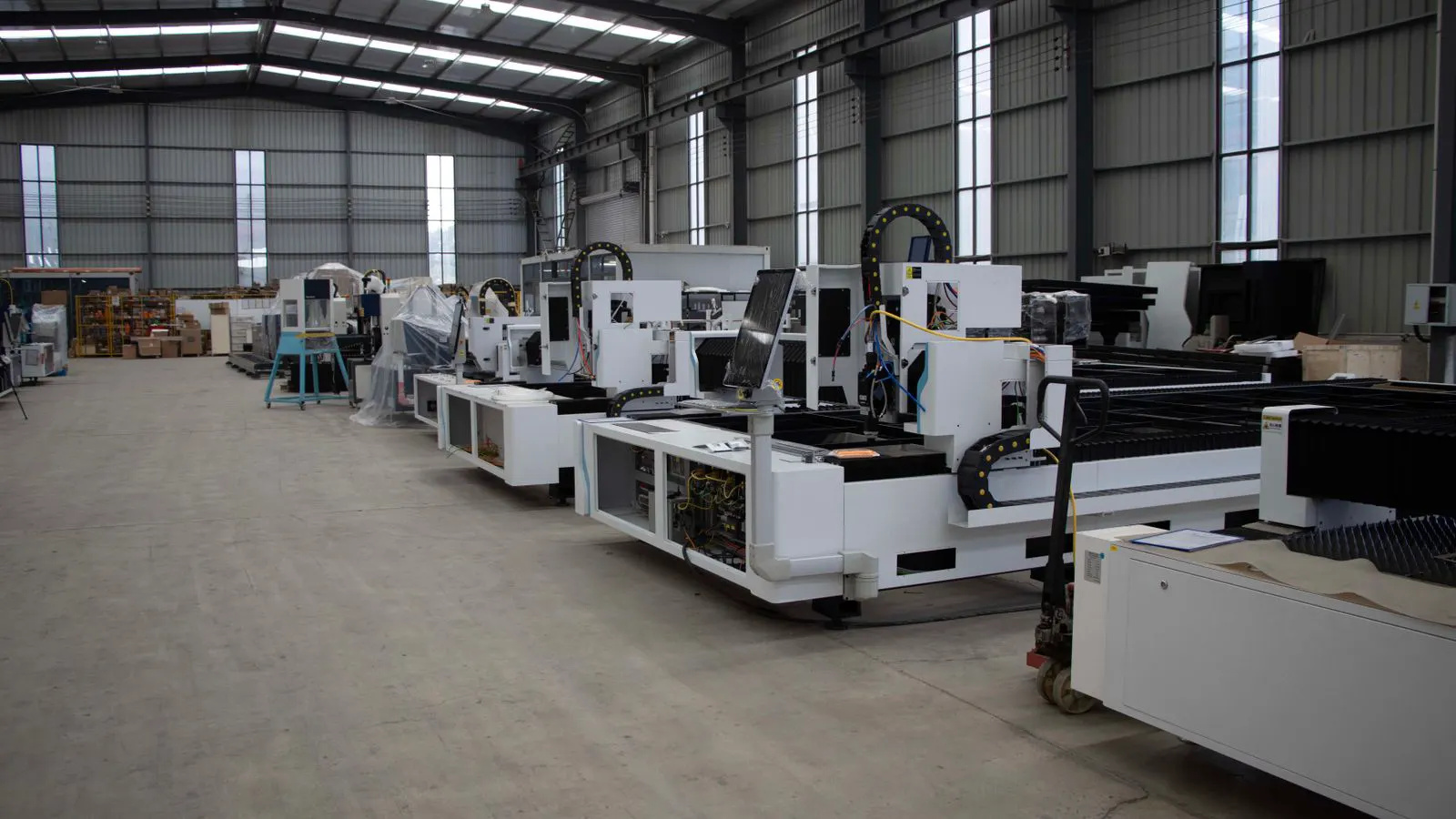
Visit their manufacturing facility if possible. Observe how raw materials are stored, how work-in-progress is identified, and how finished machines are protected during storage and shipping. Look for labeled work orders, clean work areas, and organized inventory. Speak with quality control personnel. Ask about their defect rate, common failure modes, and corrective action processes. Observe how they handle a non-conforming part. Do they tag it and move it to a quarantine area, or does it sit on a bench until someone remembers? The organization of their shop floor often reflects the rigor of their quality processes.
Red flags include: no documented quality procedures, inability to trace machine components to specific production batches, no defined acceptance criteria, or quality personnel who cannot explain test procedures. A supplier who treats quality as an afterthought will deliver machines that require extensive rework and will have weak warranty support. Ask for a sample traceability report. You should be able to see how a specific machine serial number links to the specific spindle, control board, and structural components used in its construction.
Service Network and Support Structure
Before signing a contract, map out the service network that will cover your facility. Identify the nearest service technicians, their average response time, and the scope of work they can perform on-site versus what requires factory return. Request references from existing customers in your region. Contact these references and ask specific questions. How long did it take to resolve a spindle issue? Did the technician have the correct spare part on hand? How was the problem communicated after the technician left?
Ask about spare parts availability and lead times. Critical components such as spindles, control boards, and tool changers should have established supply chains. Confirm whether the supplier maintains local inventory or relies entirely on factory shipping. This distinction matters significantly during production downtime. A delay of one week for a common bearing is tolerable. A delay of four weeks for a spindle motor is not. Ask for a list of critical spare parts and their typical lead times. If a part is available only by order, request a quote for an expedited shipment.
Evaluate their remote support capabilities. Do they offer phone or remote diagnostic support? What is their average ticket resolution time for common issues? Request examples of past service calls and how they were resolved. Look for a system that allows remote access to diagnostic data. Modern controls can often identify faults without physical access. A supplier that offers remote diagnostics can often save you a trip to the factory and reduce your downtime. A supplier with a weak service network will leave you stranded when the machine fails.
Financial and Operational Stability
A CNC machine is a multi-year investment. The supplier must remain viable to provide parts, software updates, and technical support for the machine’s full operating life. Review their financial statements or request a credit reference. Look for indicators of stable revenue, manageable debt, and consistent customer base. You are buying a long-term relationship, not just a piece of equipment. If the company disappears, you lose access to critical support.
Check their production capacity. If their factory is at full capacity, your delivery date may slip. Ask about their current order backlog and typical lead times. Confirm whether they have subcontractors for any components. Subcontracted parts can introduce quality inconsistencies and supply chain risks. For example, if a supplier outsources the construction of the machine frame, the quality control process for that component may differ from their in-house processes. Ask which components are manufactured in-house and which are purchased. For purchased components, ask about the supplier’s quality agreement with the subcontractor.
Red flags include: frequent management changes, declining customer base, high debt levels, or an inability to provide financial references. A financially unstable supplier may be forced to cut corners on quality or service to survive, which will eventually impact your machine’s performance and support. Ask about their employee retention rate, particularly for their service engineers and engineers. High turnover in the service department can mean that your machine is serviced by a new technician who has not yet learned its specific quirks.
Contract and Warranty Terms
Review the warranty terms carefully. Standard warranties typically cover mechanical and electrical components for one to two years. Clarify what is excluded. Software, consumables, and damage from misuse are commonly excluded. Request the warranty claim process in writing. Understand who bears the cost of shipping for parts that need to be returned to the factory. Some warranties require you to ship the part back at your expense, while others cover the return shipping. This difference can be significant for heavy components.
Understand the service contract options. Some suppliers offer extended warranties, preventive maintenance programs, or performance guarantees. Compare these against the cost of an independent service provider. A strong service contract can be worth more than a longer warranty if the supplier’s service network is weak. Look for a contract that includes defined response times and service levels. If a part fails and the supplier promises to send a technician within 48 hours, make sure that promise is in writing.
Negotiate the delivery and acceptance criteria. Define what constitutes machine acceptance. This should include specific performance tests, documentation delivery, and training completion. If the machine fails acceptance, the supplier must have a clear remediation process. Do not leave acceptance criteria vague. Define the specific tests you will run. For example, you may run a specific part geometry and measure the dimensions. If the dimensions fall outside your tolerance, the machine fails acceptance. Define the process for re-testing. Who pays for the re-test? How many re-tests are allowed?
Red flags include: vague warranty language, no defined acceptance criteria, refusal to provide service contract options, or pressure to sign before reviewing terms. A credible supplier will welcome detailed contract terms and will not rush the process.
Communication and Technical Support Testing
Before finalizing the contract, test the supplier’s communication protocols. Send a technical question and measure the response time and accuracy. Ask a question that requires a specific answer, such as the maximum feed rate for a particular material. If the response is generic or takes several days, note that. Request a project manager assignment. Confirm that you will have a single point of contact for the entire project lifecycle. A single point of contact reduces the risk of information getting lost between departments.
Ask about their technical documentation. You should receive operation manuals, maintenance guides, programming references, and troubleshooting documents. Confirm the format and availability of these materials. If documentation is only available in the factory’s local language, that is a red flag for international buyers. Ask for a sample of the programming reference. Can you find the instruction for a specific operation? Is the language clear? If the documentation is difficult to understand, your engineers will spend more time deciphering it than running the machine.
Evaluate their training program. Request details on operator training, maintenance training, and programming support. Confirm the duration, location, and level of expertise of the instructors. Inadequate training leads to poor machine utilization and increased downtime. Ask if the training includes a hands-on component where your staff can run the machine. Ask if the training covers specific parts you plan to make. If the supplier offers only a generic tour of the machine, ask if they can tailor the training to your processes.
Red flags include: slow or inaccurate technical responses, no assigned project manager, incomplete documentation, or vague training commitments. A supplier that struggles to communicate basic technical information will struggle when your machine fails during production.
Final Due Diligence Checklist
Complete this checklist before signing any CNC machine supplier contract. Work through each item systematically and document your findings.
- Verify all technical specifications against your production requirements
- Request and review sample inspection reports and test data
- Review quality management documentation and procedures
- Visit the manufacturing facility and observe quality practices
- Map the service network for your specific region
- Confirm spare parts availability and lead times
- Review financial statements and credit references
- Check production capacity and current order backlog
- Review warranty terms and service contract options
- Define machine acceptance criteria in the contract
- Test technical support response times and accuracy
- Request complete technical documentation in your language
- Confirm training program details and instructor qualifications
- Obtain references from existing customers in your region
- Document all supplier commitments in writing
Use this checklist as a standard part of your supplier selection process. Apply it to every CNC machine supplier evaluation. Consistent due diligence reduces risk and ensures you are making an informed decision based on verified facts rather than sales claims.
Frequently asked questions
How much time should I budget for supplier due diligence?
A thorough evaluation typically takes two to four weeks. This includes document review, facility visits, reference calls, and contract negotiations. Rushing this process increases the risk of selecting an unsuitable supplier.
What are the most common red flags in CNC machine supplier selection?
The most frequent red flags include inability to provide inspection data, vague service network details, weak financial indicators, and refusal to define acceptance criteria. These issues predict poor post-sales support and machine performance.
Should I require a factory visit during supplier evaluation?
A factory visit is strongly recommended for significant machine purchases. It allows you to observe quality practices, production capacity, and company culture firsthand. If a supplier refuses a visit, that refusal is itself a significant red flag.
How do I verify a supplier's service network coverage?
Request a detailed service map showing technician locations, response times, and scope of work. Contact service personnel directly to verify their availability. Ask existing customers for their experience with service response and resolution.
What documents should I require from a CNC machine supplier before contract signing?
Require technical data sheets, quality management documentation, warranty terms, service network details, financial references, and complete technical documentation. Each document should be specific to your machine configuration and operating region.