CNC Machine Builder: Standardized vs. Customized Builds
Off-the-shelf CNC machines offer faster delivery and lower risk, while co-developed solutions match unique parts and workflows. The right choice depends on part geometry, production volume, and how much engineering time you can commit to defining requirements.
- Standardized machines reduce integration risk and shorten time to first part.
- Custom builds solve specific part or process problems but require detailed front-end engineering.
- A hybrid approach can deliver a custom enclosure or control layout on a proven core machine.
- Verify the builder's capacity to handle changes after the design freeze.
- Service networks matter more for custom machines because spare parts are not widely available.
What a CNC machine builder actually decides
A CNC machine builder determines the machine’s core architecture, not just the cosmetic finish. The decision between a standardized unit and a co-developed build shapes tool access, part orientation, cycle times, maintenance access, and the speed at which you can reach full production.
The trade-off is rarely about capability. Most production builders can machine the same aluminum, steel, or titanium on either platform. The difference lies in how much of the machine is fixed versus how much is engineered around your process. A standardized machine follows a proven layout. A custom build adds or removes features to fit a specific part family or a constrained factory floor.
Where standardized production makes sense
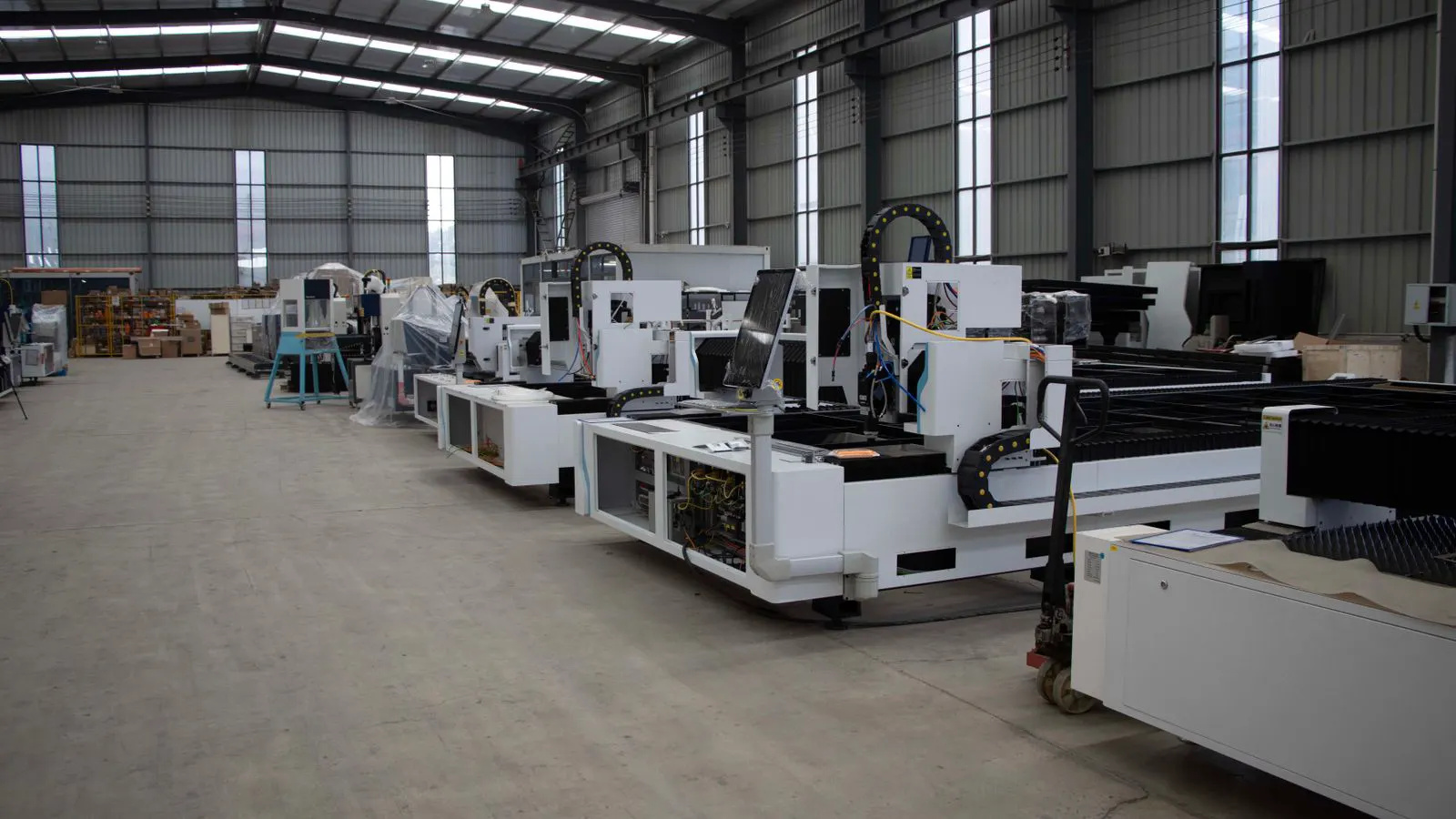
Standardized production machines are the default choice for many facilities. They come from a catalog or a small set of configurations. The builder has already solved the structural, thermal, and control problems. The buyer’s job is to select spindle power, table size, axis configuration, and control system.
This approach works when the part is not unusually shaped, the material is common, and the bottleneck is throughput rather than machine form. A buyer can often receive a standardized machine in weeks. The service network is broad. Spare parts are common. Other plants run similar machines, so operators and maintenance teams already understand the workflow.
The limit is flexibility. If the part requires a fifth axis that the standard layout does not support, or if the tooling must rotate in a way the spindle cannot handle, the builder may offer a modification. That modification can push the project toward a custom build.
Where custom machine design earns its cost
Custom machine design makes sense when the part or process breaks the standard envelope. A buyer may need a machine that machines a long, thin part without deflection. A heavy-duty workholding system may be required for a large casting. The factory floor may have a low ceiling, so the machine must be shorter than the standard model.
In these cases, the builder acts as an engineering partner. The buyer provides part drawings, material specs, tooling plans, and floor constraints. The builder responds with a machine concept, a finite element analysis, a thermal model, and a test plan. The cost is higher, and the schedule is longer. The return is a machine that removes a process constraint that a standard unit cannot.
The risk shifts from the machine itself to the requirements. If the buyer’s specifications are incomplete, the custom build will inherit those gaps. The builder can only engineer against what is given.
How to compare the two approaches
The comparison below separates the two paths by the factors that matter most to a purchasing manager.
| Option | Best for | Limitations |
|---|---|---|
| Standardized production | Common part families, fast ramp-up, broad service support | Limited to the builder’s catalog and typical tooling patterns |
| Custom machine design | Unusual geometry, heavy workholding, floor constraints, integrated automation | Higher upfront cost, longer lead time, dependence on front-end engineering |
| Modified standard build | A standard machine that needs one or two changes, such as a larger door or a different control | Each change can affect balance, cooling, and maintenance |
| Platform-based custom | A custom enclosure or tooling system built on a proven machine architecture | The core machine is still constrained by the platform’s limits |
| Full co-development | A new product line with no existing machine equivalent | Highest cost, longest timeline, greatest need for internal engineering input |
When a hybrid approach is the smarter path
A hybrid path is often the most practical. The buyer selects a standardized core machine and asks the builder to modify specific elements. For example, the builder may add a larger coolant tank, a different door configuration, or a custom pallet changer. The machine remains based on a proven structure, but it fits the plant’s workflow.
This approach works when the custom need is at the perimeter rather than the center. If the spindle, table, and axes can remain standard, the risk is lower than a full custom build. The buyer still gets a tailored machine without carrying the full engineering burden of defining every subsystem.
The key is to define the modification scope early. A request that begins as a small change can grow quickly. A custom pallet system, for example, may require new controls, new hydraulics, and a revised safety enclosure. Each change affects the machine’s balance, cooling, and serviceability.
How to evaluate the builder’s role in the decision
The CNC machine builder’s value depends on how much engineering the buyer expects to do. A supplier of standardized machines is a vendor. A co-development partner is an engineering resource. The buyer must decide which role fits the project.
For a standardized purchase, the buyer’s due diligence focuses on catalog fit, service coverage, and reference machines. For a custom build, the buyer must verify the builder’s design process, test capability, and capacity to handle changes. A builder that offers custom work should be able to show past examples of similar modifications, not just a general statement of capability.
The buyer should also clarify who owns the design. In a custom build, the buyer may provide part data and process requirements, while the builder provides the machine design. The contract should state who makes design changes, who approves changes, and who bears the risk if a design fails in testing.
How to protect the schedule and budget
The schedule for a standardized machine is usually driven by the builder’s production plan. The buyer can negotiate delivery dates, but the core machine is already in production. The schedule risk is lower.
The schedule for a custom machine is driven by the design freeze. Until the design is approved, the builder cannot order long-lead items such as spindles, linear drives, or control cabinets. The buyer must commit to a design date. If the buyer changes the part or the process after the freeze, the schedule will slip.
The budget should include more than the machine price. A custom build may require additional tooling, fixtures, and integration work. The buyer should ask for a cost breakdown that separates the machine, the customization, and the engineering. This makes it easier to see where the cost is going and where the buyer can reduce scope.
How to decide when the choice is unclear
When the decision is unclear, the buyer should start with the part. If the part can be made on a standard machine with standard tooling and standard workholding, the answer is usually a standardized production machine. If the part requires a unique orientation, a special material handling method, or a process that cannot be replicated on a standard unit, the answer is likely a custom build.
The buyer should also consider the product life. If the part family will run for five years or more, the higher cost of a custom build may be justified. If the product is a short-run project, the cost of a custom build may not be recoverable. The buyer should ask the builder to run a cost model that compares the two options over the expected production life.
The final decision should be based on the total cost of ownership, not the purchase price. A standardized machine may have a lower price, but if it cannot meet the production target, the cost of downtime and manual intervention will be higher. A custom machine may have a higher price, but if it removes a bottleneck, the cost per part will be lower.
Frequently asked questions
Can a standardized machine be modified later?
Yes, but the scope of modification matters. Small changes like a different door or a larger coolant tank are common. Major changes to the spindle or table may require a full custom build.
How long does a custom build take compared to a standardized machine?
A custom build takes longer because of design, testing, and long-lead ordering. A standardized machine can often be delivered from stock or a short production queue.
Who should define the requirements for a custom build?
The buyer defines the part and process requirements. The builder defines the machine design. Both parties should agree on the design freeze date and the change control process.
Is a custom machine always more reliable?
Not necessarily. A custom machine is only as reliable as its design and testing. A standardized machine has a proven track record. The buyer should verify the builder's test plan and quality systems.
How can a buyer reduce the risk of a custom build?
Start with a detailed part analysis, define the design freeze date, and require a test plan before the build begins. The buyer should also verify the builder's service network and spare parts strategy.