CNC Machine Buyers Guide: Key Specs by Industry
Buyers must match technical specifications to their industry's production demands. This guide highlights which machine parameters drive cost, quality, and uptime across different sectors. It provides a framework for evaluating machines against your specific part and material requirements.
- Match machine tolerance ratings to your part's critical dimensions, not just general capability.
- Evaluate spindle power, rigidity, and duty cycle against your primary cutting tools and materials.
- Select control systems and software interfaces based on operator training time and production workflow.
- Prioritize machine layout and floor space constraints early in the selection process to avoid costly retrofits.
- Review documentation requirements, such as calibration records and warranty terms, as part of the total cost.
Why Generic Specs Fail in Industry Selection
A standard machine brochure lists the same maximum travel, spindle speed, and control interface for every buyer. This approach ignores the reality that a medical device shop, an aerospace parts vendor, and a sheet metal fabricator have completely different failure points. A machine that runs efficiently for aluminum brackets may produce scrap when cutting hardened steel for a pump shaft.
The core problem is that buyers often look at machine limits rather than required performance. A 20-micron accuracy rating sounds impressive, but if your parts only require 50 microns, that extra precision does not justify the price premium or the stricter environmental controls. Conversely, a machine rated at 50 microns may be useless for a company producing optical lenses.
This guide breaks down the technical parameters that matter most in specific sectors. It separates the “nice to have” from the “must have.” Use the criteria table in the later sections to structure your internal evaluation.
Accuracy and Repeatability: The Baseline Requirements
Accuracy is the distance between the actual part and the intended dimension. Repeatability is the machine’s ability to return to the exact same position after multiple cycles. These two metrics are often confused but function differently in production.
For most general machining, repeatability is the tighter constraint. If a machine can hold position within one micron, but has a systematic error of ten microns, you can compensate for that error in the tool offset. If the machine cannot repeat its position, you cannot compensate.
Medical device manufacturers typically require tighter repeatability because of strict regulatory inspections. Aerospace buyers often focus on both accuracy and repeatability because of the high cost of rework. General metal fabrication may accept wider tolerance bands but demands higher throughput.
When reviewing a spec sheet, look for the stated repeatability in X, Y, and Z axes. Check if the number is a mean or a maximum. A mean value is less useful for worst-case scenarios. Always ask for the position accuracy data as well.
Spindle Design and Cutting Capability
The spindle is the heart of the machine. It determines cutting speed, tool life, and the types of operations you can perform. A spindle rated for high RPM may lack the torque needed for roughing operations on castings.
Aerospace and medical buyers often prioritize rigid spindles for machining difficult materials like titanium or nickel alloys. These materials generate significant heat and require high chip evacuation rates. A high-speed spindle with a long nose extension can cause tool deflection, leading to poor surface finish or tool breakage.
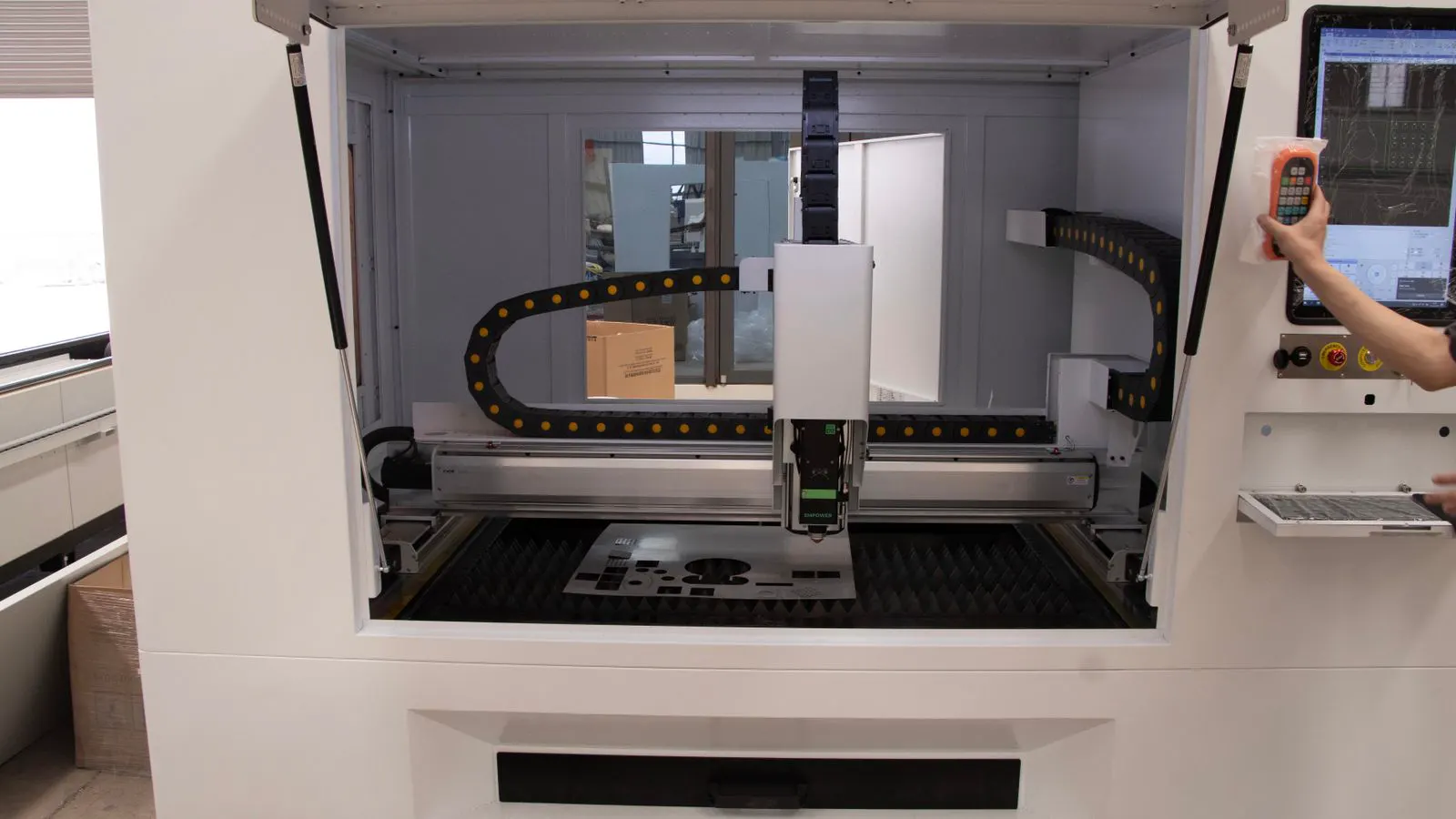
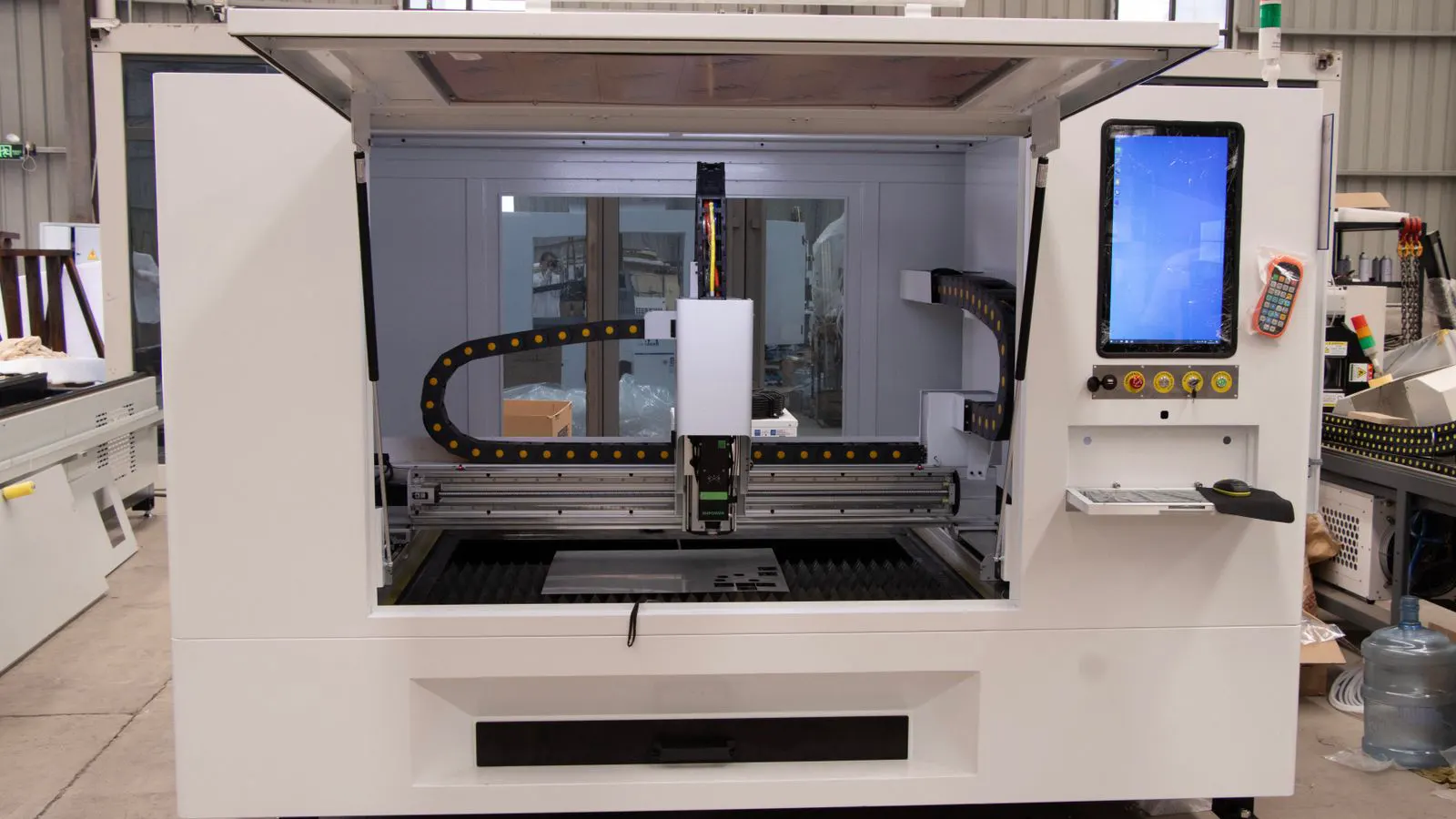
Sheet metal and laser cutting centers require different spindle characteristics. The focus shifts to the cutting head or laser power rather than the mechanical spindle. For turning centers, the spindle’s torque and the number of tool turrets matter more than maximum RPM.
Check the spindle’s thermal stability. A machine that runs at high RPM for hours without thermal drift is different from one that requires a long warm-up period. Ask the vendor for thermal performance data under load.
Control Systems and Software Integration
The control system is the interface between the machine and the operator. A complex system can produce high-quality parts but requires specialized training. A simpler system may be easier to use but might lack the features needed for 5-axis simultaneous machining.
Machining centers for high-volume production often use closed-loop controls with automatic part probing. These systems allow the machine to verify part dimensions in real time and adjust offsets automatically. This reduces the need for manual measurement and inspection.
For small job shops, a user-friendly interface with a clear display is more valuable than advanced automation. The operator should be able to load a program, run a test cycle, and identify errors without extensive training.
Consider the software ecosystem. If your company uses CAM software from a specific vendor, check compatibility. Some controls support native code from certain CAM packages, while others require post-processing. This can add hours to programming time.
Machine Layout and Floor Space
The machine footprint includes the cabinet, coolant tank, chip conveyor, and operator space. A large machine may fit in a spacious facility but create workflow bottlenecks in a compact shop.
Sheet metal fabrication often requires larger floor space for material handling. A CNC press brake or laser cutter needs room for loading large plates and unloading finished panels. The machine itself may be smaller than the space required around it.
Machining centers for 5-axis work need space for tool changes and part loading. A rotary table or trunnion axis changes the machine’s profile. Ensure there is clearance for the tool magazine and the operator’s safe zone.
Check the weight of the machine. A large milling machine may require floor reinforcement. If you are relocating, the building’s load capacity must support the machine and its attached coolant systems.
Power, Cooling, and Environmental Controls
CNC machines draw significant power, especially during heavy cutting. A high-torque spindle can spike power usage. Ensure your facility’s electrical supply can handle the load without voltage drops.
Cooling is a critical factor. Spindles and ways require oil or water cooling to maintain temperature. In environments with high ambient heat, the machine may require additional air conditioning or a dedicated cooling system.
For precision industries, the temperature of the shop floor affects part dimensions. Aluminum expands more than steel. If you are holding tight tolerances, a temperature-controlled room is often necessary. This adds capital cost but protects part quality.
Check the coolant system’s capacity. A machine that processes chips continuously needs a large tank and efficient filtration. A small tank with poor filtration leads to clogged nozzles and reduced cutting performance.
Selection Criteria by Industry
Use the table below to evaluate your specific needs. This is a starting point. Adjust the weights based on your production volume, material, and quality requirements.
| Criterion | What to look for | Why it matters |
|---|---|---|
| Tolerance Rating | 5, 10, or 20 microns | Matches part critical dimensions |
| Spindle Power | Torque and RPM balance | Determines cutting speed and tool life |
| Control Type | Closed-loop with probing | Reduces manual inspection and errors |
| Machine Rigidity | Cast iron frame, short tool extension | Maintains accuracy under cutting load |
| Coolant System | Tank size and filtration rate | Prevents tool wear and machine downtime |
| Software Integration | CAM compatibility and post-process | Reduces programming time and errors |
Decision Checklist Before You Sign
- Define your part tolerance requirements. Identify the critical dimensions that cannot be compromised.
- List your primary materials. Check the machine’s ability to cut those materials at the required speed.
- Estimate your production volume. A high-volume shop needs different throughput capabilities than a prototype shop.
- Review the machine layout. Measure your floor space and verify the machine fits with room for workflow.
- Check the control system. Ensure your operators can learn it quickly and that it supports your CAM software.
- Evaluate the environmental needs. Determine if you need temperature control or special ventilation.
- Review the documentation. Request calibration records, warranty terms, and maintenance schedules.
- Calculate the total cost. Include installation, programming, training, and spare parts.
Common Mistakes to Avoid
Buyers often focus on the machine’s maximum capability rather than its minimum required performance. This leads to over-specification and unnecessary cost. A machine that can do more than you need is not necessarily better. It is just more expensive.
Another mistake is ignoring the operator. If the control system is too complex, your staff will make errors. This leads to scrap and rework. A machine that is easy to operate and maintain often outperforms a more powerful one that is difficult to use.
Do not skip the floor space check. A machine that fits in the brochure but not in your shop is a non-starter. Measure your space, including the area needed for material handling and chip disposal.
Finally, review the warranty terms carefully. A strong warranty covers the spindle, control system, and main components. Check the response time for service calls. A machine with a long warranty but slow service is less valuable than one with a shorter warranty and fast support.
Final Thoughts
Selecting a CNC machine is a process of matching specifications to your industry’s demands. There is no single best machine for every application. The right machine is the one that meets your tolerance, material, and volume requirements without unnecessary cost. Use the criteria table and the checklist to guide your evaluation. Talk to your team, visit the machine in person if possible, and verify the specs against your actual parts.
A well-chosen machine reduces downtime, improves part quality, and increases return on investment. A poorly chosen machine creates headaches and high costs. Take the time to evaluate each specification carefully. The result will be a machine that fits your production process and supports your business goals.
Frequently asked questions
What is the difference between accuracy and repeatability in a CNC machine?
Accuracy is how close the machine is to the intended position. Repeatability is how consistently it returns to the same position. Accuracy can be compensated in software, but repeatability cannot.
How do I know if a machine is rigid enough for my material?
Check the frame material, the spindle's nose extension, and the cutting force. For difficult materials like titanium, look for a short tool extension and a heavy cast frame.
Is a high RPM spindle always better?
No. High RPM is useful for finishing and small tools. Roughing operations require torque, not speed. Match the spindle to your primary cutting tasks.
What is the most common mistake in CNC machine selection?
Over-specifying the machine. Buying a machine with features you do not need increases cost and complexity without improving your parts.
Do I need a temperature-controlled room?
It depends on your tolerance requirements and materials. If you are working with aluminum or holding tight tolerances, temperature control helps maintain part dimensions.